

Paseo del Prado
ITINERARY ALONG THE PASEO DEL PRADO
Itinerary on the Paseo del Prado
The Paseo del Prado and the Jerónimos Quarter are two of Madrid's most emblematic and elegant areas, steeped in history, art, and nature. This route traverses the so-called "Landscape of Light," a distinction it earned when it was declared a UNESCO World Heritage Site in 2021. This recognition highlights the unique value of this space, which combines an extraordinary cultural axis, historic gardens, and monuments of great importance.
Known as Europe's first tree-lined promenade, the Paseo del Prado is a place where tradition and modernity coexist. From its origins in the 16th century as a route for enjoying nature to its transformation into a cultural corridor, this promenade is home to some of the world's most important museums, monumental fountains, and historic green spaces. The nearby Jerónimos Quarter, meanwhile, is an aristocratic enclave that grew up around the Royal Monastery of San Jerónimo, linking spirituality with royalty.
On this itinerary, we'll discover how this "cultural landscape" connects architectural beauty with nature, and how it has witnessed major historical milestones in Madrid. Shall we begin? 😊
1. Bank of Spain
The Bank of Spain building is one of the most outstanding architectural gems on the Paseo del Prado. Built between 1884 and 1891, this imposing building reflects the eclectic style that prevailed at the time, with Neoclassical and Renaissance influences. It was designed by the architects Eduardo Adaro and Severiano Sainz de la Lastra, and, since its inauguration, it has housed the headquarters of the Bank of Spain.
One of the most fascinating features of this building is the famous vault, where the gold reserves are kept. Urban legend says that part of this vault is protected by a system that would flood its interior with water drawn from the nearby Canal de Isabel II in case of theft.
Historical curiosities:
- The facade features reliefs and sculptures that symbolize economic prosperity, work, and industry.
- During the Spanish Civil War, Spain's gold, known as "Moscow gold", was closely linked to operations managed from this location.
2. Cibeles Fountain
The Cibeles Fountain is one of Madrid's most iconic symbols and a key landmark in the city. Designed by the architect Ventura Rodríguez in 1782, it represents the goddess Cybele, mother of the gods and a symbol of fertility and nature. The goddess appears seated in a chariot drawn by two lions, representing Atalanta and Hippomenes, mythological figures punished for their forbidden love.
Originally located in front of the Buenavista Palace, the fountain was moved to its current location in the 19th century. Its function was not always ornamental: in its early days, citizens used the fountain's water for domestic purposes, and until 1862, a guard ensured that no one drew more water than permitted.
Current data:
- The fountain is a place of celebration for Real Madrid fans, who gather here every time their team wins a title.
- It is surrounded by important historical buildings, such as the Cibeles Palace and the Buenavista Palace.
3. Cibeles Palace
Originally known as the Palace of Communications, this monumental building is now Madrid City Hall and a leading cultural center. Designed by Antonio Palacios and Joaquín Otamendi, it was inaugurated in 1919 as the Post and Telegraph Office. Its architectural style blends Neo-Gothic and Modernist elements, and its imposing white stone façade makes it one of the most photographed buildings in the city.
Featured spaces:
- Cibeles Viewpoint: From its terrace, you can get spectacular panoramic views of the Paseo del Prado, the Gran Vía and other emblematic points of Madrid.
- CentroCentro: Inside the building is a cultural space with exhibitions, activities and a luxury restaurant.
The Cibeles Palace symbolizes modernity and communication, uniting past and present in its function as an administrative and cultural center.
4. Fountain of Apollo
The Fountain of Apollo, located on the Paseo del Prado, is part of a group of fountains designed to beautify this historic thoroughfare during the reign of Charles III. Also known as the Fountain of the Four Seasons, it represents the god Apollo, protector of the arts, music, and poetry, making it a tribute to the cultural spirit that permeates this area.
The fountain was designed by sculptor Manuel Álvarez, who created the figure of Apollo holding a lyre and surrounded by allegorical figures representing the seasons. It is less well-known than the Cibeles or Neptune fountains, but its symbolism integrates it perfectly into the "Landscape of Light."
Fun fact: This fountain is part of the "Salón del Prado", the first tree-lined promenade in Europe, which sought to integrate nature, water and architecture in a public space.
5. Monument to the Heroes of the Second of May
This monument, located on the Paseo del Prado, pays homage to the heroes of the popular uprising of May 2, 1808, when the people of Madrid rebelled against the Napoleonic occupation troops under Joseph Bonaparte. The revolt marked the beginning of the Spanish War of Independence.
The monument was inaugurated in 1908, on the centenary of the uprising. Designed by Aniceto Marinas, it depicts a group of combatants in a heroic pose, with flags and weapons. Its stone base includes inscriptions commemorating the names of some of the heroes and the main events that took place that day.
Historical significance:
- It is a tribute to the courage and sacrifice of the citizens of Madrid, who fought for freedom against a powerful enemy.
- It reflects the nationalist spirit and the pride of the Spanish people in their history.
6. Madrid Stock Exchange
The Madrid Stock Exchange, located in Plaza de la Lealtad, is Spain's main stock market and a symbol of the country's modern economy. Its current building was inaugurated in 1893 and designed by the architect Enrique María Repullés. Neoclassical in style, its imposing façade stands out, featuring a portico of six Corinthian columns that lend it an air of solemnity and elegance.
The building was constructed to reflect the stability and prosperity of the Spanish economy during the 19th century. Inside, the Trading Room boasts majestic decor, including a large stained-glass window symbolizing the country's productive forces. Although the digital environment has transformed stock market operations, this space remains an iconic and functional location.
Historical curiosity: The square where the Madrid Stock Exchange is located also houses the Monument to the Fallen for Liberty, dedicated to the victims of the revolts and conflicts of the Napoleonic era. This monument connects the financial institution with the country's historical memory.
7. Prado Museum
The Prado Museum is one of the world's most important art galleries and a treasure of Spanish culture. Inaugurated in 1819 as the Royal Museum, the building was designed by Juan de Villanueva in the late 18th century under the orders of Charles III, who initially conceived it as a Cabinet of Natural Sciences. However, its transformation into an art museum made it the cultural epicenter of the Paseo del Prado.
The museum's collection includes masterpieces by artists such as Velázquez, Goya, El Greco, Rubens, and Titian. Among its most celebrated works are Las Meninas, The Garden of Earthly Delights, and The Nude Maja. Furthermore, the Prado is essential for understanding the evolution of Western art, from the Renaissance to the 19th century.
Interesting facts:
- During the Spanish Civil War, many of the works were evacuated to protect them from bombing.
- The Prado is part of the so-called Art Triangle, along with the Reina Sofía Museum and the Thyssen-Bornemisza Museum, which enrich the cultural offering of the area.
8. Royal Spanish Academy (RAE)
The headquarters of the Royal Spanish Academy, founded in 1713, is another iconic landmark on the Paseo del Prado. This building, inaugurated in 1894, was designed by the architect Miguel Aguado de la Sierra in an eclectic style with Neoclassical and Renaissance details. From here, work is carried out on the preservation and evolution of the Spanish language, a language that connects more than 500 million people worldwide.
The building houses an important library and historical collections related to the Spanish language and literature, as well as being the center of debate on changes in the Dictionary of the Spanish Language, a work that the Academy constantly updates.
Fun fact: The motto of the RAE, "It cleans, it fixes and it gives splendor", summarizes its mission to safeguard the purity and richness of the language, without forgetting its dynamic and living character.
9. Casón del Buen Retiro and Salón de Reinos: The Buen Retiro Palace and its disappearance
The Casón del Buen Retiro and the Salón de Reinos are two of the few remaining vestiges of the majestic Buen Retiro Palace, built in the 17th century during the reign of Philip IV. This palace was conceived as a royal summer residence, located on the outskirts of the city, and became a symbol of the splendor of the Spanish Golden Age.
The Buen Retiro Palace
The palace, which occupied much of the land where the Retiro Park is now located, included gardens, fountains, sumptuous halls, and auxiliary buildings. Its construction was made possible by the reuse of war materials from the Thirty Years' War, allowing this enormous complex to be erected in record time. Among its most outstanding spaces was the Hall of Realms, decorated with canvases by great masters such as Velázquez (The Surrender of Breda), Zurbarán, and other artists of the period.
However, after the War of Independence (1808-1814), the palace suffered severe damage from bombardments by Napoleonic troops. Over the years, most of its buildings were demolished, leaving only two: the Casón del Buen Retiro and the Salón de Reinos.
The Casón del Buen Retiro
The Casón is a building that was originally used as a ballroom. Today it is part of the Prado Museum and is notable for its impressive vaulted ceiling decorated by Luca Giordano, known as "The Allegory of the Golden Fleece." This building has been restored several times and houses temporary exhibitions and spaces dedicated to heritage conservation.
The Hall of Realms
The Hall of Realms, which originally formed part of the palace complex, owes its name to the paintings that decorated its walls, depicting the coats of arms of the various kingdoms of the Spanish monarchy. It is currently being restored to become a museum space associated with the Prado Museum, which will highlight the history of the Buen Retiro Palace and the works of art that comprised its collection.
Historical significance: The Buen Retiro Palace symbolized the power and glory of the Spanish monarchy during the Golden Age, while its disappearance is a reminder of the historical conflicts and changes that marked Madrid.
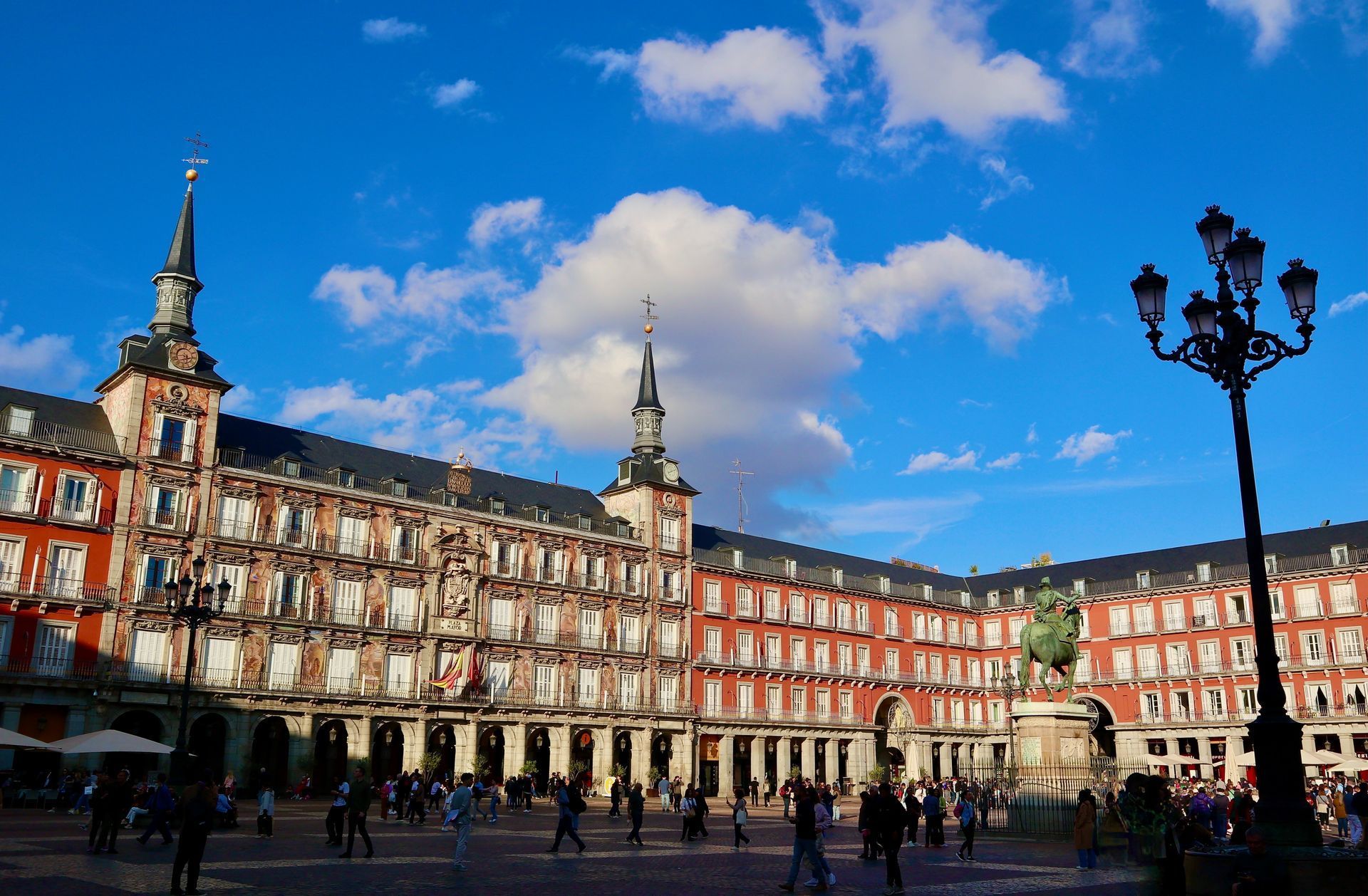
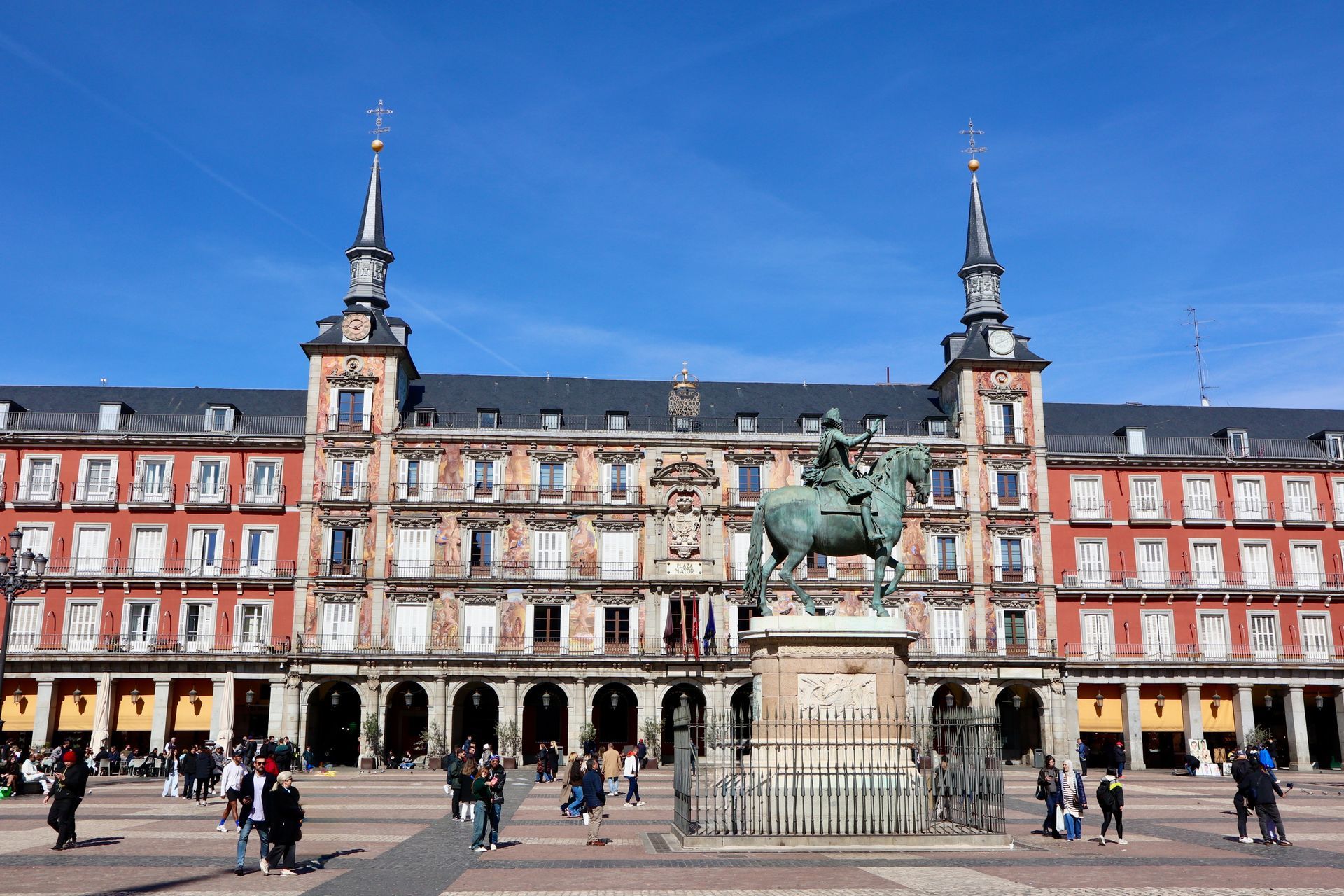
- Bullfights, celebrations, and even Inquisition trials have all taken place here. Built in the Herrerian style, it is notable for its arcaded buildings, such as the Casa de la Panadería (Bakery House), which formerly housed the bakers' guild and features frescoes on its façade. In the center of the square stands the equestrian statue of Philip III, who commissioned its construction.
- Tip: Stroll through the arcades and admire the architecture. You can take the opportunity to have a drink at one of the terraces and observe the life of the square, always lively and steeped in history.
ITINERARY
- Royal Palace
- Opera
- Almudena Cathedral
- Madrid of the Habsburgs
- Town Square
- Main Square
- Puerta del Sol
- Muslim Madrid
- The oldest restaurant in the world
- Civil war
- Madrid Scene
- Church of Saint Nicholas
- Elbow Street
- San Miguel Market
- Centenary shops
- and much more...