

MADRID UNDER THE HABSBURGS
MADRID UNDER THE HABSBURGS
Plaza de las Descalzas Reales
- History: This square is famous for housing the Royal Monastery of Las Descalzas Reales, founded in 1559 by Juana of Austria, sister of Philip II. Originally, it was the palace of Charles I and Isabella of Portugal, and later became a convent. Many noblewomen and queens lived here and donated their wealth, making it a true treasure trove of art and relics. The convent houses an important collection of paintings, sculptures, and tapestries of great historical value.
- Tip: Consider taking a guided tour to learn about the lives of the nuns and the artistic treasures found in the monastery.
Isabel II Square
- History: This square, also known as Plaza de Ópera, was dedicated to Isabella II, who was Queen of Spain in the 19th century. A statue of Isabella II stands in the center of the square. The square has been a meeting place and cultural center of Madrid for centuries. Its history is linked to the development of the Teatro Real and the urban renewal of central Madrid.
- Tip: Take the opportunity to admire the surroundings and the historic buildings that surround the square. You can also take a break at one of the cafes to soak up the atmosphere.
Royal Theatre of Madrid (Madrid Opera House)
- History: The Teatro Real, inaugurated in 1850, is one of Europe's most important opera houses. Its construction was commissioned by Queen Isabella II, and the building has undergone several renovations, including a 20th-century refurbishment that transformed it into the modern theater it is today. During the Spanish Civil War, the theater closed and reopened as the home of the national opera company in the 1990s. Inside, it boasts impressive acoustics and hosts major opera productions and concerts.
- Tip: If possible, take a guided tour to see the interior and learn more about its architecture and the secrets of the stage.
Plaza de Oriente
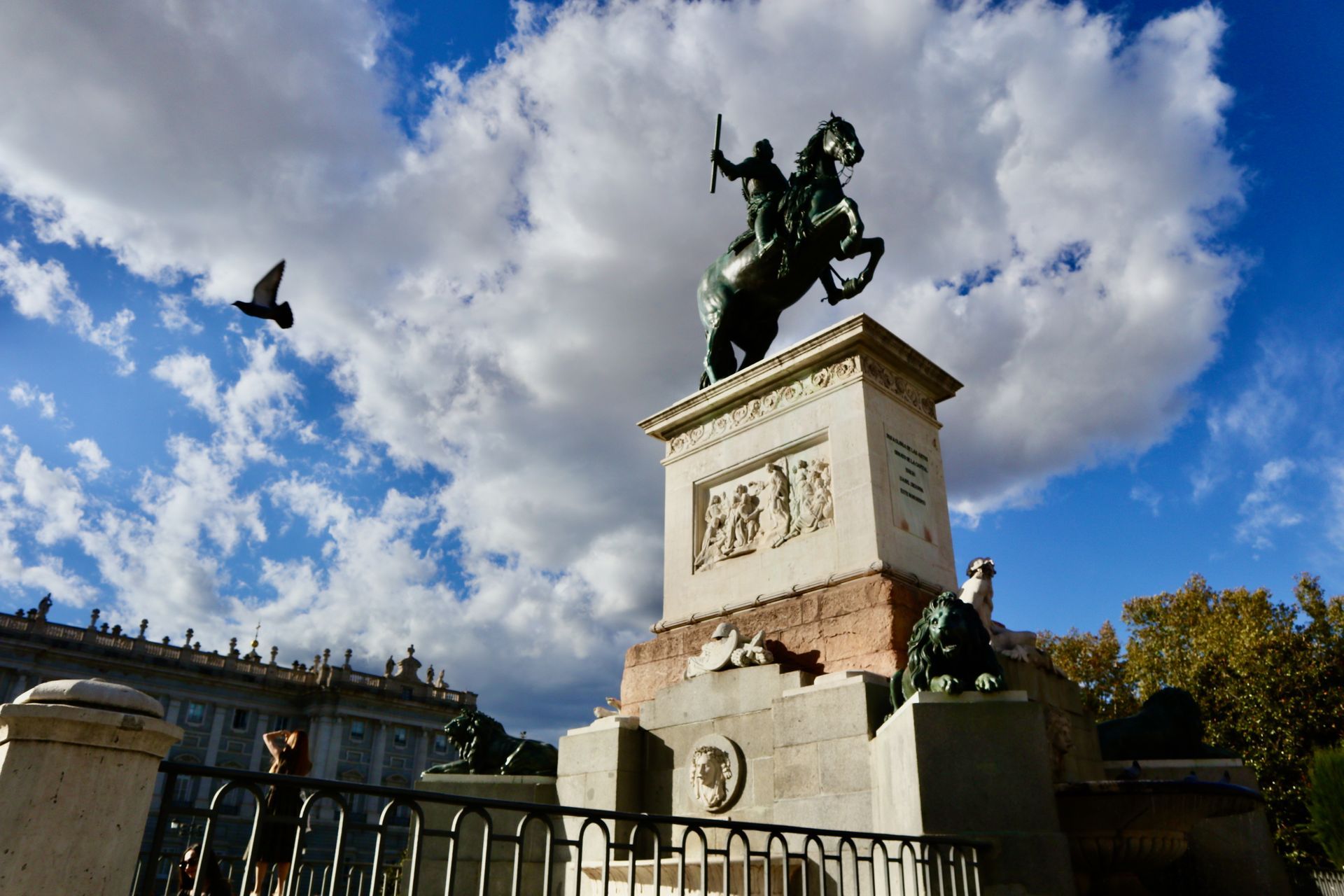
- History: The Plaza de Oriente was conceived by Joseph Bonaparte during the Napoleonic occupation, although its construction was completed in the 19th century under the reign of Isabella II. Facing the Royal Palace and the Royal Theatre, this square is home to 44 statues of Spanish kings, known as the "Gothic kings." Each statue represents a historical figure of the Spanish monarchy. The square is an example of European garden architecture and boasts splendid views of the Royal Palace.
- Tip: Stroll through the gardens and discover the story of each king. Observe the geometric layout of the square and the sculptural details.
Statues in the Plaza de Oriente
- History: The statues that adorn this square represent the Visigothic kings of the Iberian Peninsula, such as Reccared and Pelayo, among others. They were commissioned to decorate the Royal Palace, but were ultimately placed in the Plaza de Oriente due to their great weight.
- Tip: Research each historical figure and their relevance to Spanish history as you walk among the statues.
Royal Palace of Madrid
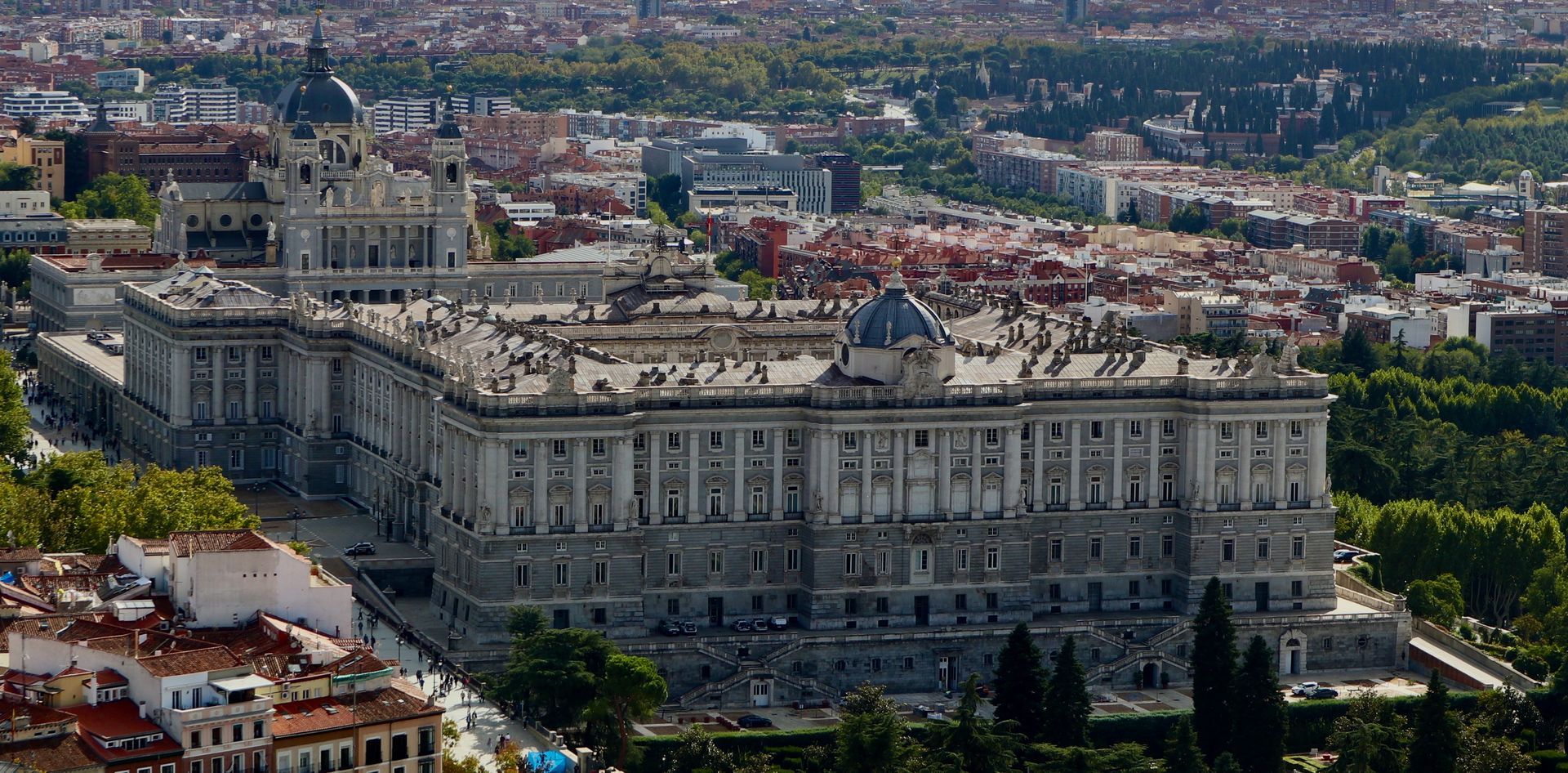
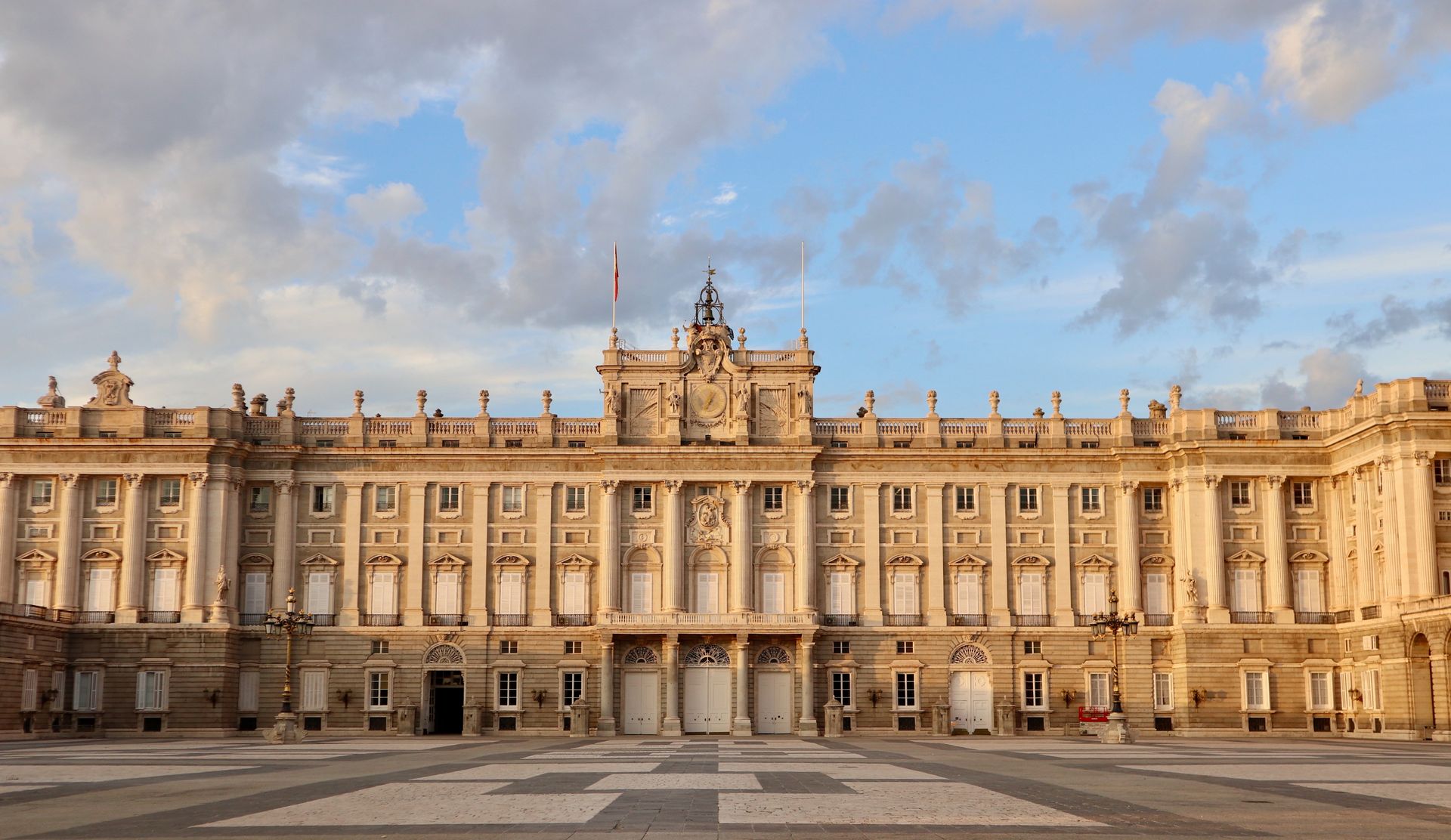
- History: The Royal Palace of Madrid, also known as the Palace of the East, is the official residence of the Spanish royal family, although it is now mainly used for ceremonies and official events. Its construction began in 1738 under the orders of Philip V, the first Bourbon monarch of Spain. The building was constructed on the site of the former Alcázar of Madrid, which had been destroyed by fire in 1734.
- Designed by the architect Filippo Juvarra and completed by Giovanni Battista Sacchetti, the palace is an example of the Italian Baroque style, although it also incorporates Neoclassical elements. With over 3,400 rooms, it is one of the largest palaces in Europe, surpassing even Versailles and Buckingham Palace in size. Its main façade, with its columns and sculptures, is a symbol of the power of the Spanish monarchy.
- Over the centuries, the palace has been expanded and redecorated by several kings. Charles III, considered one of the building's best administrators, furnished it with luxurious furniture and numerous works of art. Charles IV, in turn, brought artists such as Francisco de Goya, whose paintings are displayed in the palace. Isabella II and Alfonso XII also left their mark on its decoration and architecture.
Featured spaces:
- The Main Staircase: Designed by Sabatini, this monumental staircase features a large fresco on the ceiling, painted by Corrado Giaquinto, depicting the “Apotheosis of the Spanish Monarchy.”
- Throne Room: Decorated with red and gold velvet, with impressive chandeliers and mirrors. This room is still used for official receptions and ceremonies.
- Hall of the Halberdiers: One of the largest and most lavish spaces, used for parades and ceremonies.
- State Dining Room: With a capacity for more than 100 people, it is where state banquets are held.
- Royal Chapel: Built to house religious relics and sacred works of art, such as the famous Stradivarius collection.
- Sabatini Gardens and Campo del Moro: The gardens surrounding the Royal Palace are ideal places to stroll and enjoy views of the building.
- Tip: The guided tour is highly recommended to learn about the historical and artistic details of the palace. Also, don't miss the changing of the guard, which takes place in the Plaza de la Armería every Wednesday and Saturday (check the schedule), and the grand Solemn Changing of the Guard once a month, a very special event steeped in tradition.
Interesting facts: The Royal Palace houses the collection of weapons and armor of the Royal Armoury, one of the most important in the world.
- It also boasts an impressive collection of Stradivarius, the famous stringed instruments dating back to the 17th century.
- Although the official residence is the Royal Palace, the royal family lives in the Zarzuela Palace, on the outskirts of Madrid.
Almudena Cathedral
- History: The Cathedral of Santa María la Real de La Almudena is the main church of Madrid and the episcopal seat of the city. Its construction began in 1883, but it was not completed until 1993, when it was consecrated by Pope John Paul II. The cathedral features a blend of styles, from Neoclassical on its exterior to Neo-Gothic on its interior and a modern style in the crypt. It is dedicated to Our Lady of Almudena, patron saint of Madrid, and its name refers to an old legend that says the statue of the Virgin was found in the city's Moorish wall.
- Tip: Climb to the dome for panoramic views of Madrid and take time to explore the crypt, which is one of the oldest and least known corners of the cathedral.
Town Square
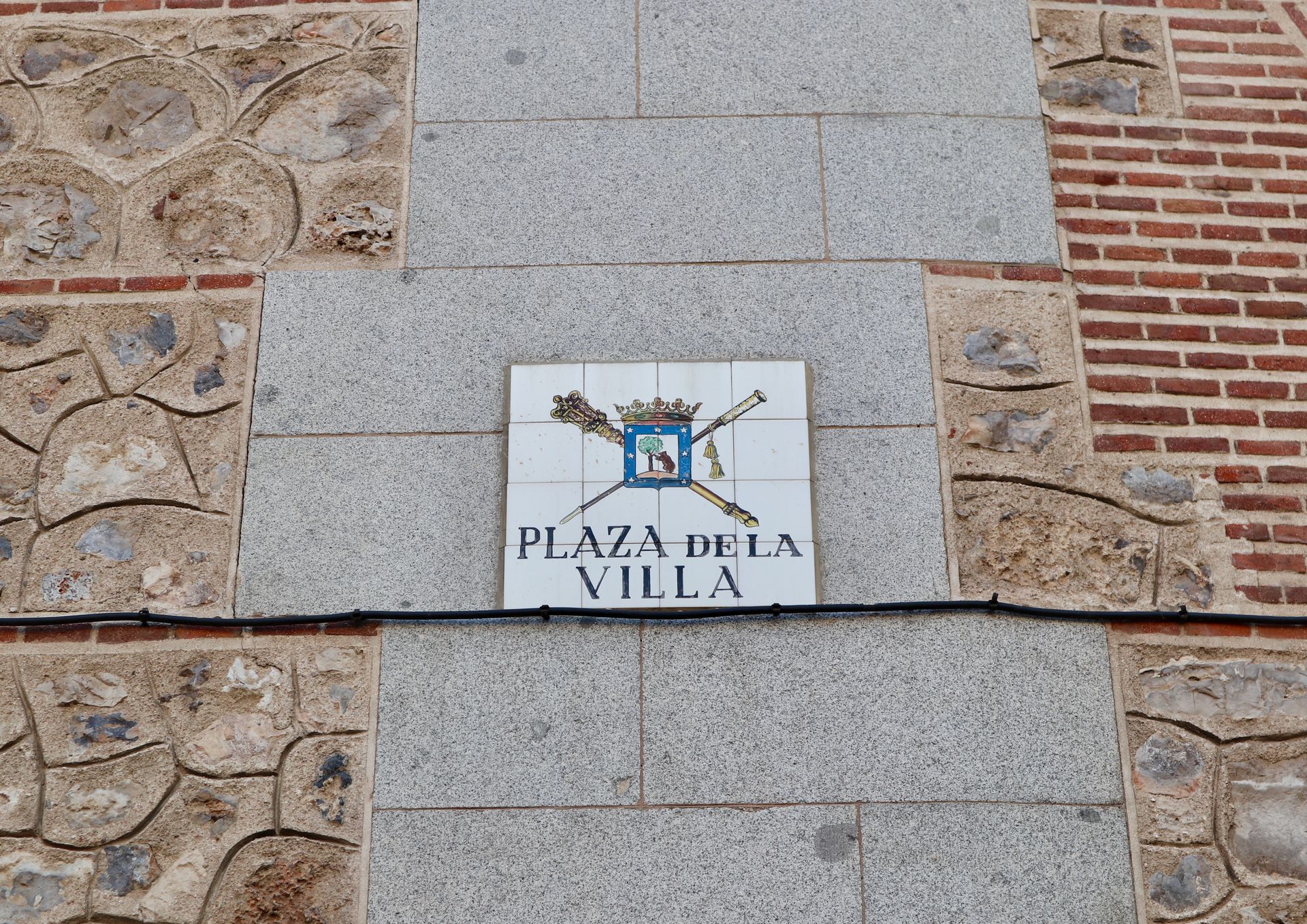
- History: Plaza de la Villa is one of Madrid's oldest squares and was the city's administrative center during the Middle Ages. It is surrounded by historic buildings such as the Casa de la Villa (the former city hall), the Casa de los Lujanes (one of Madrid's oldest houses), and the Casa de Cisneros. The latter is a Renaissance palace built in 1537 and exemplifies Madrid's architecture from the Habsburg era. In the center of the square stands a statue dedicated to Don Álvaro de Bazán, admiral and military hero.
- Tip: Take time to explore the buildings surrounding the square and observe the architectural details of each one.
Cisneros House
- History: The Casa de Cisneros is a Renaissance palace built in 1537 by Benito Jiménez de Cisneros, nephew of the famous Cardinal Cisneros. The building features Renaissance architecture, notable for its stone and brick façade and balconies. The house has served various purposes throughout history, including municipal functions. Through its architecture and decoration, it offers a glimpse into the lifestyle of Madrid's nobility in the 16th century.
- Tip: Take note of the windows and balconies decorated with Renaissance motifs. Although you can't go inside, the exterior is worth seeing for its wealth of architectural details.
Town House
- History: Located in the Plaza de la Villa, the Casa de la Villa served as Madrid's City Hall from the 17th century until the early 21st century. Built in 1644 by Juan Gómez de Mora, this building is one of the finest examples of Madrid's Baroque architecture from the Habsburg era. Its façade blends Herrerian-style elements with Baroque details, such as the balconies and the clock in the tower. Inside, you'll find historic decorations and furnishings, and its light well features an impressive staircase and a coffered ceiling.
- Tip: Although it's not always open to the public, if you have the chance to go inside, don't miss the Plenary Hall and the Goya Room, decorated with tapestries and historical portraits.
Elbow Street
- History: Calle del Codo (Elbow Street) is one of Madrid's narrowest and most picturesque streets, known for its distinctive "elbow" or sharp bend. Located in the heart of Habsburg Madrid, its history is steeped in legend, as nobles and important figures of the court once resided in this area. This cobbled street retains its medieval appearance and is believed to owe its name to the turns that forced people to slow their pace, making it a perfect location for ambushes and robberies.
- Tip: Walk slowly and observe the details of the old buildings that surround it. Immerse yourself in the atmosphere of another era and take photos of this unique spot.
Arch of Cutlers
- History: The Arco de Cuchilleros (Arch of the Cutlers) is one of the most emblematic entrances to the Plaza Mayor. It was built after the fire of 1790 to improve access to the square and is part of the Plaza Mayor's architecture designed by Juan de Villanueva. It owes its name to the workshops of cutlers and artisans who were located in the area and supplied knives and tools to the butchers in the market. Today, the arch is a popular entry point to the Plaza Mayor and is surrounded by traditional restaurants and taverns.
- Tip: As you walk down through the arch, admire the facades and windows of the houses that have retained their historical character. This is a great place to stop and try some tapas at one of the nearby taverns.
San Miguel Market
- History: Built in 1916, the San Miguel Market is one of Madrid's oldest and most iconic markets. Its unique iron structure is reminiscent of early 20th-century markets, when they were considered modern and functional. Renovated in 2009, the market has become a renowned gastronomic destination. Here you can find a wide variety of Spanish products, from fresh seafood and cured meats to tapas and wines. It's a must-visit for anyone wanting to sample traditional Madrid cuisine.
- Tip: It's not the cheapest market in Madrid, but it is the most picturesque. Take your time browsing the stalls and try specialties like croquettes or Iberian ham if they're within your budget. It's an excellent place to take a break and enjoy the local cuisine.
Main Square
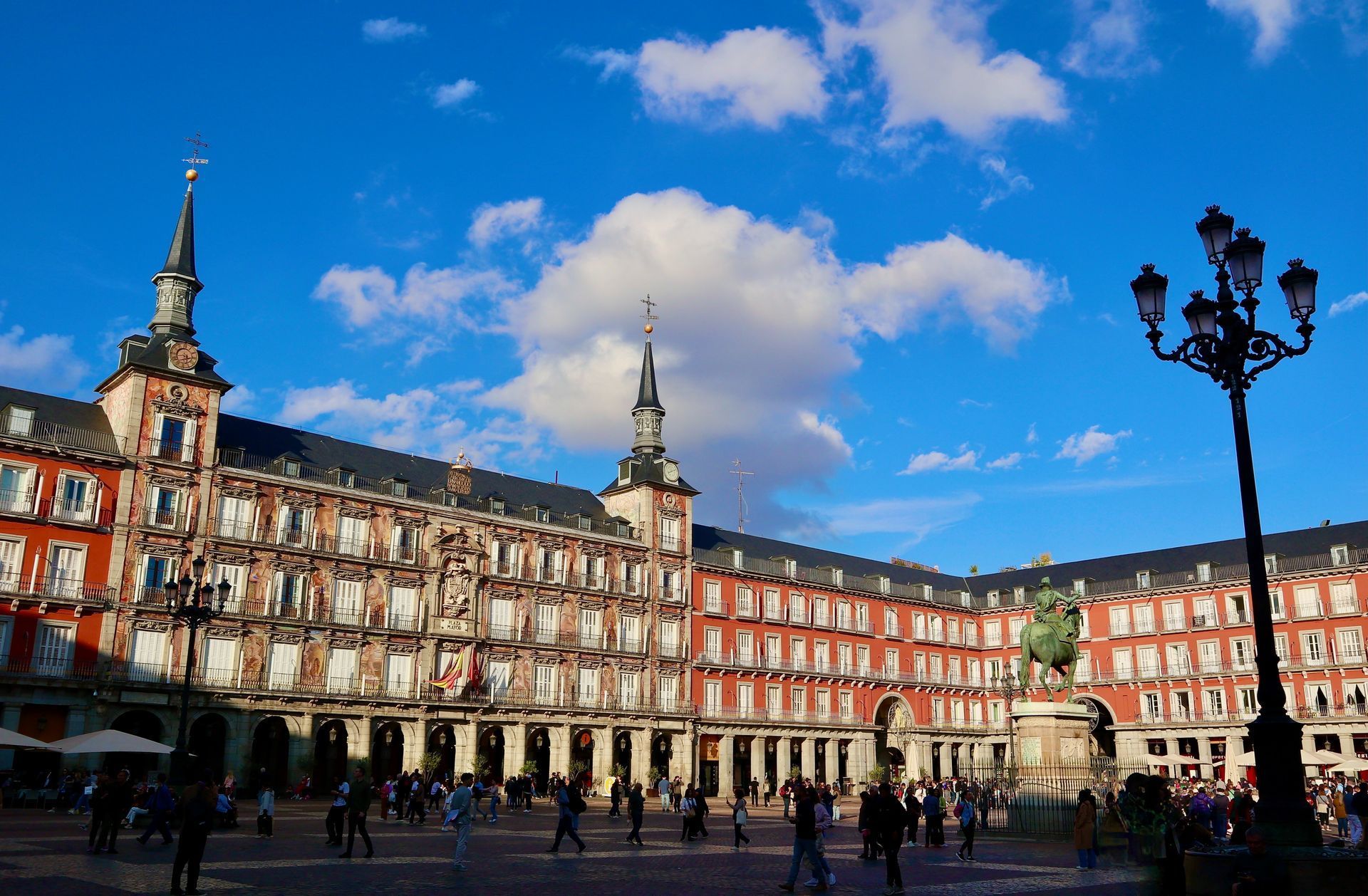
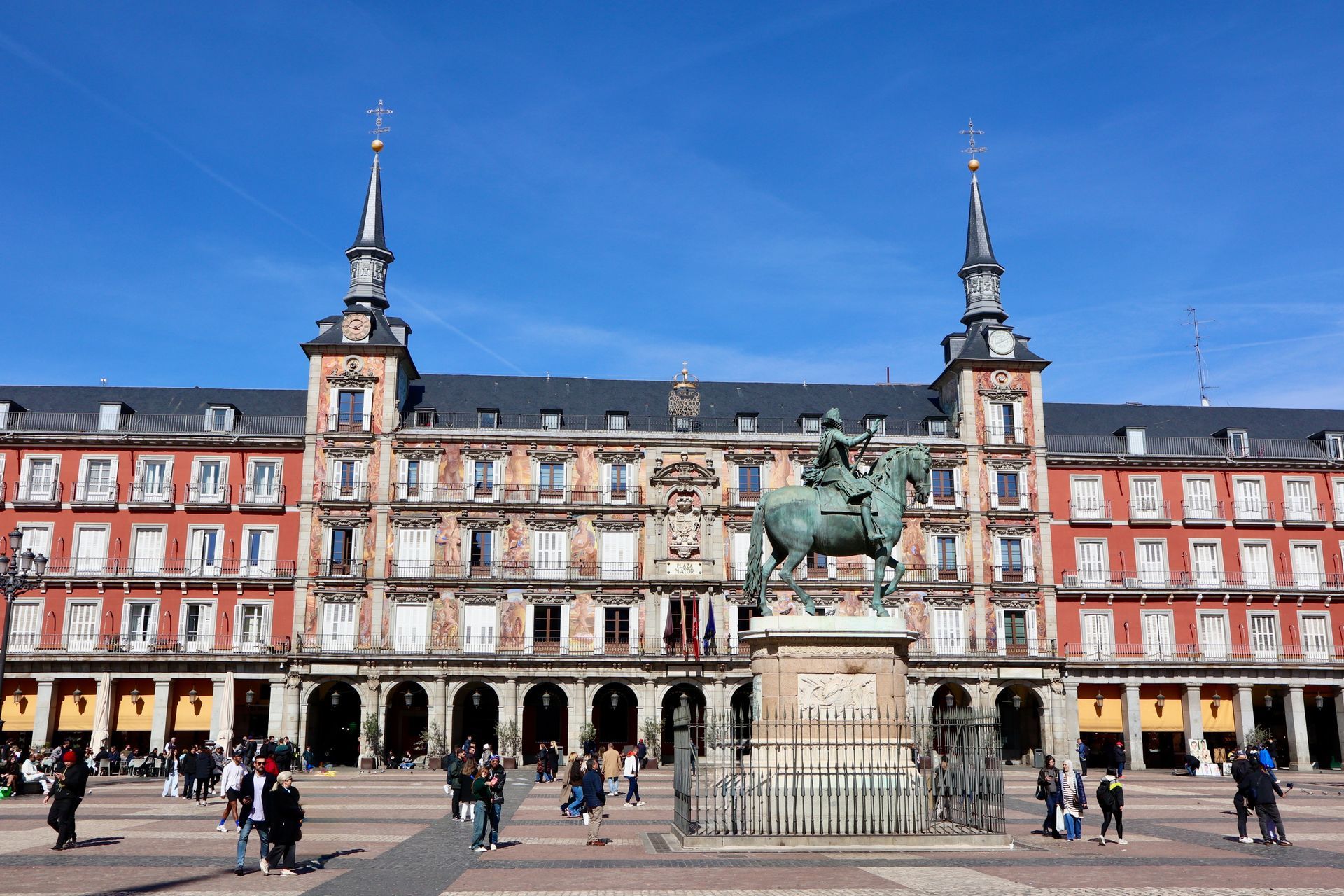
- History: The Plaza Mayor is one of Madrid's most important landmarks. It was built in the 17th century by the architect Juan Gómez de Mora and renovated after several fires. The square has been the site of markets, bullfights, celebrations, and even Inquisition trials. Built in the Herrerian style, it is notable for its arcaded buildings, such as the Casa de la Panadería (Bakery House), which formerly housed the bakers' guild and features frescoes on its façade. In the center of the square stands the equestrian statue of Philip III, who commissioned its construction.
- Tip: Stroll through the arcades and admire the architecture. You can take the opportunity to have a drink at one of the terraces and observe the life of the square, always lively and steeped in history.
ITINERARY
- Royal Palace
- Opera
- Almudena Cathedral
- Madrid of the Habsburgs
- Town Square
- Main Square
- Puerta del Sol
- Muslim Madrid
- The oldest restaurant in the world
- Civil war
- Madrid Scene
- Church of Saint Nicholas
- Elbow Street
- San Miguel Market
- Centenary shops
- and much more...