

LA LATINA
Itinerary in La Latina
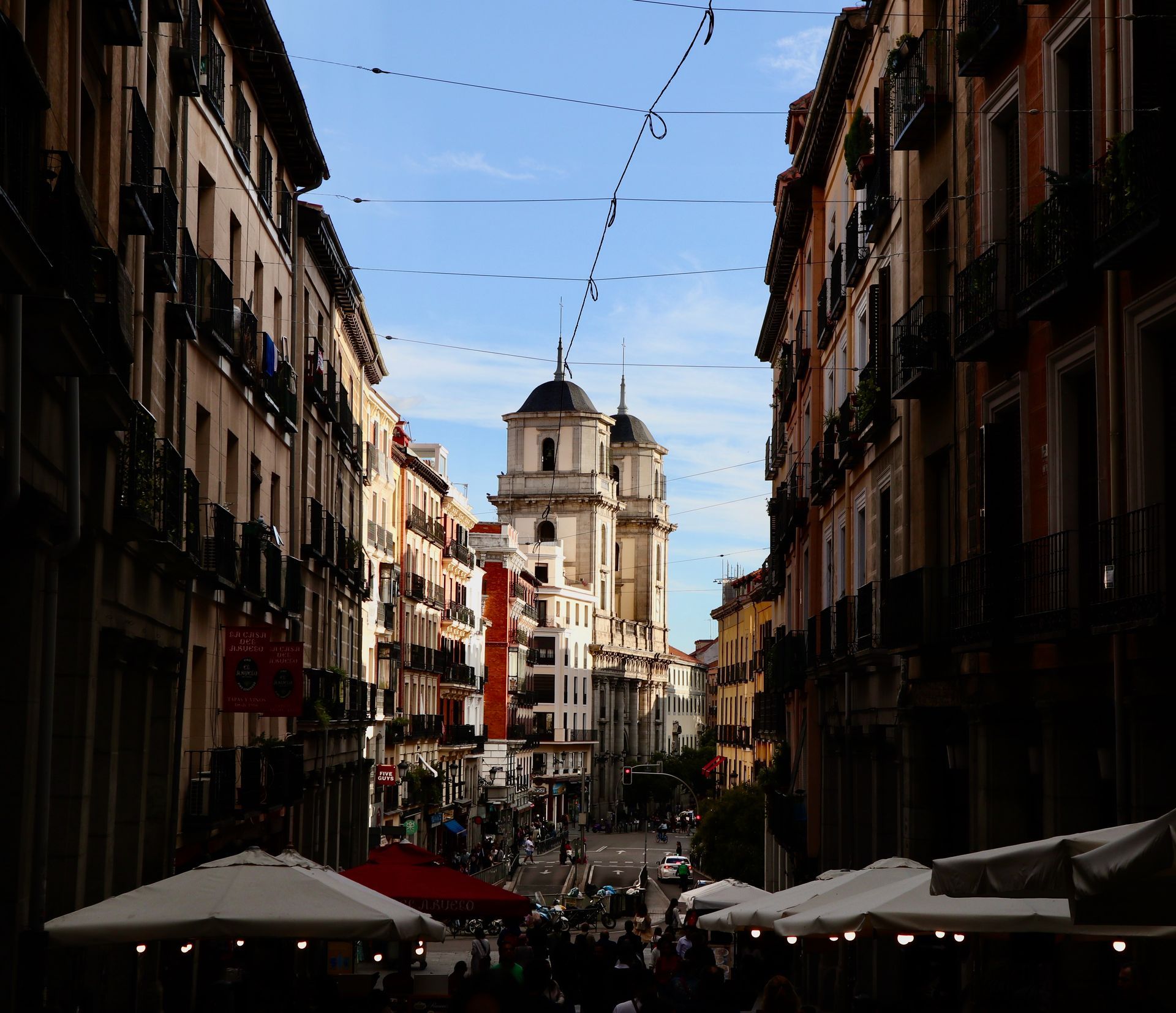
La Latina is a neighborhood located in the heart of Madrid, surrounded by other areas of great tourist interest such as Austrias, Sol-Gran Vía, Lavapiés and Madrid Río.
Its streets, laid out in the medieval style, are characterized by their irregular, narrow, and winding layout, many of which open onto picturesque squares. Originally, these streets formed part of the suburbs located outside the old walls that surrounded the citadel of Madrid. During the medieval period, these areas welcomed merchants who came to sell their wares, leaving a strong commercial imprint on the neighborhood. Many of its streets and squares reflect this tradition in their names, such as Plaza de la Cebada (where the food market was formerly located), Plaza de los Carros, Plaza de la Paja, and the famous Rastro (open only on Sundays and holidays), the city's most iconic open-air market.
The neighborhood owes its name to Beatriz Galindo, known as La Latina, a prominent 15th-century writer and humanist. She was the tutor of Queen Isabella I of Castile and her children, and together with her husband, she founded a hospital on Toledo Street, near Plaza de la Cebada, known as the Hospital de La Latina.
1. Basilica of San Isidro
The Basilica of San Isidro is one of Madrid's most important churches and was intended to be the city's cathedral until the construction of the Almudena Cathedral. Built in the 17th century, its Baroque design is the work of architects Pedro Sánchez and Francisco Bautista, and it was commissioned by the Jesuits. Originally, it was the church of the Imperial College, but after the canonization of Saint Isidore in 1622, it was adapted to house his relics.
During the Spanish Civil War, the church suffered severe damage and lost much of its original decoration. However, it has been restored and remains an essential place of worship for the people of Madrid. Its austere façade contrasts with the richness of its interior, which features neoclassical altarpieces and the chapel dedicated to Saint Isidore, which houses an urn containing his relics.
Fun fact: In May, during the San Isidro festivities, this basilica becomes a central point of the celebrations in honor of the patron saint of Madrid.
2. Cava Baja and Cava Alta
Cava Baja and Cava Alta are two of the most emblematic streets in La Latina. These streets have their origins in the Middle Ages, when they formed part of the old walls of Madrid. The "cavas" were defensive moats that, over time, were filled in and transformed into streets.
- Cava Baja: Famous for its taverns and restaurants, Cava Baja is a must-see for lovers of Madrid's gastronomy. In the 16th century, this street served as lodging for merchants arriving in the city, as it was full of inns. Today, many of these inns have been transformed into iconic establishments, such as the Posada de la Villa and the Taberna del Capitán Alatriste, which retain their historic character.
- Cava Alta: Less busy than its neighbor, Cava Alta retains a more tranquil and bohemian atmosphere. For centuries, this street was home to artisans and small shopkeepers. Although it has changed considerably, it still preserves buildings with architectural details from the 18th century.
Legend: It is said that in the cellars there were secret passageways that connected the neighborhoods with the Royal Palace, used by nobles and clergymen to escape or to hold clandestine meetings.
3. Church of Saint Andrew the Apostle
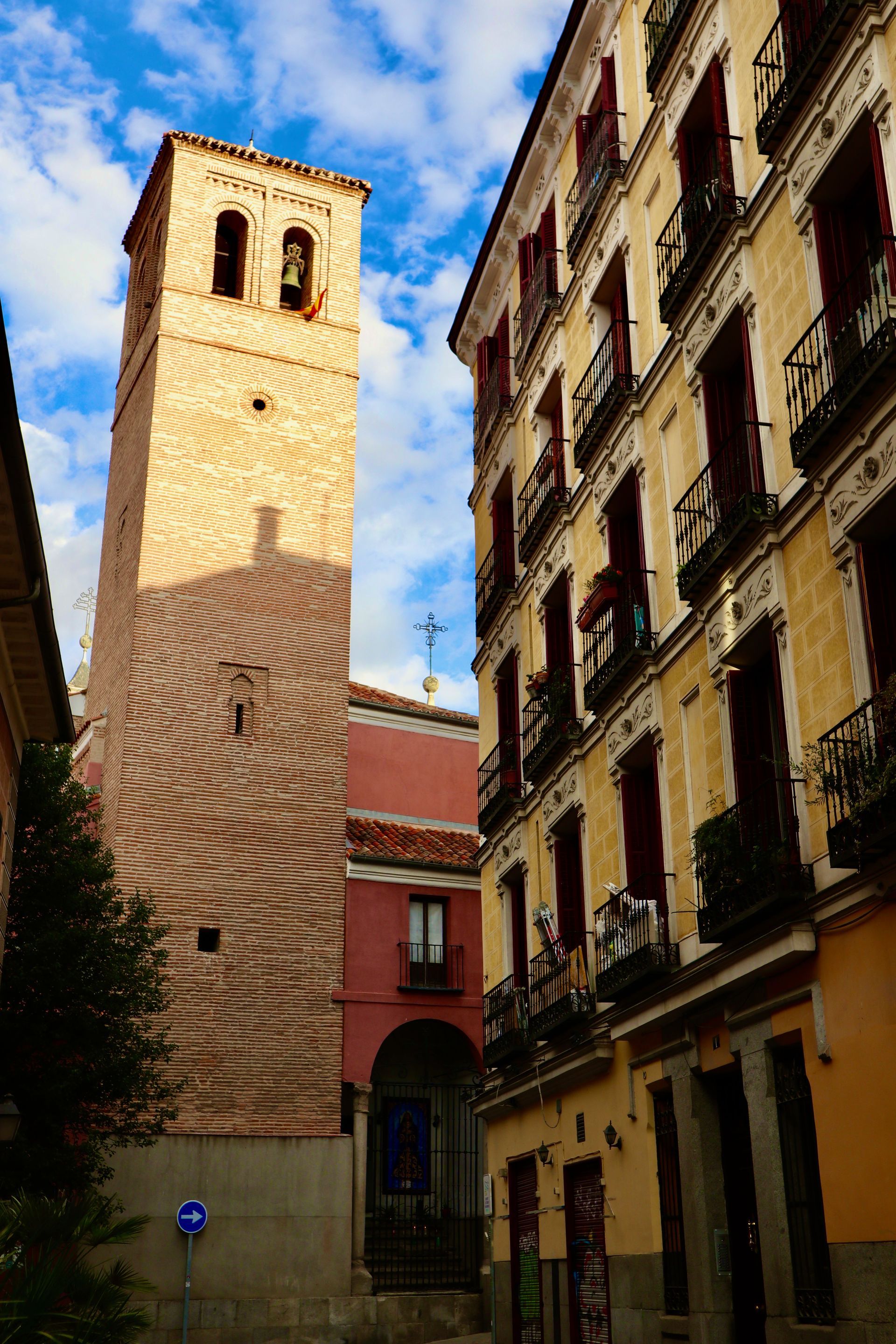
The Church of San Andrés is one of Madrid's oldest churches and a place of immense historical importance. Its origins date back to the 11th century, when it was built in the Romanesque-Mudéjar style. For centuries, it was the religious center of the neighborhood and is closely linked to the figure of Saint Isidore the Farmer, as it is believed that this saint worked in the area surrounding the church and that his family had ties to the site.
The Mudéjar tower, dating from the 13th century, is one of the oldest elements of the church and a prime example of this architectural style in Madrid. Although much of the church was rebuilt in the 17th century, it still retains some original features. It suffered severe damage during the Spanish Civil War but was restored in the second half of the 20th century.
Interesting fact: Inside the church there is a chapel dedicated to Saint Isidore, decorated with frescoes and baroque details, which recalls the importance of this saint to Madrid.
4. Prince of Anglona's Garden
The Prince of Anglona's Garden is a hidden gem in the La Latina neighborhood. This small, stately garden lies behind a brick wall, like a secret tucked away. It was designed in the 18th century as part of the Anglona Palace, a residence of Madrid's aristocracy.
The garden is an example of neoclassical landscaping, with geometric hedges, stone benches, and a central fountain that reflect the taste of the nobility of the time. For centuries it was a private space, but today it is open to the public, offering a peaceful haven in the bustling La Latina neighborhood.
Fun fact: From the garden, you can enjoy unique views of the area's historic buildings. Furthermore, several films have been shot in the surrounding area due to its romantic and tranquil atmosphere.
5. Straw Square
Plaza de la Paja is one of Madrid's oldest and most picturesque spots. During the Middle Ages, this space was the heart of Christian Madrid, serving as a meeting point for commercial and social activities. Its importance lay in the fact that it was here that the tribute in straw was collected, which the town's inhabitants had to pay to the chapter of the Church of San Andrés, located very close to the square. Hence its peculiar name.
In the 15th century, the square lost its economic importance when commercial activity shifted to other locations, such as the Plaza Mayor. However, over time it transformed into a residential area, surrounded by small palaces. One of the most prominent buildings is the Casa de los Vargas, a Renaissance mansion that belonged to the noble family that employed Saint Isidore as a farmhand.
Interesting facts:
- In one corner of the square is the entrance to the Prince of Anglona Garden, a secret corner that connects with the historical environment of this place.
- The square maintains a bohemian and relaxed atmosphere, with terraces and bars that attract both locals and visitors.
6. Church of Saint Andrew the Apostle
The Church of Saint Andrew the Apostle is one of the oldest churches in Madrid and has a close connection to Saint Isidore the Farmer. It is believed to have been one of the first Christian parishes after the Christian conquest of Madrid in the 11th century. Its original design was Romanesque-Mudéjar, although it has undergone significant renovations over time, especially in the 17th and 20th centuries.
The church was rebuilt several times, particularly after the damage it suffered during the Spanish Civil War. One of the church's most emblematic features is its Mudéjar tower, which dates from the 13th century and is one of the oldest surviving towers in Madrid.
Connection to Saint Isidore: Saint Isidore the Farmer frequented this church, and here you'll find a chapel dedicated to the saint, with frescoes and Baroque elements that recall his life. Very close to the church is the Museum of Saint Isidore, which enhances the experience by exploring the figure of Madrid's patron saint.
3. San Isidro Museum (The Origins of Madrid)
The San Isidro Museum, also known as "The Origins of Madrid," is located in the former Casa de los Vargas, the home of a noble family who employed Saint Isidore. This museum not only celebrates the life of Madrid's patron saint but also explores the city's history from prehistoric times to the 16th century.
Featured exhibitions:
- The Well of the Miracle: One of the most symbolic pieces in the museum, related to a miracle attributed to Saint Isidore, who supposedly saved his son by praying for the waters of the well to bring him back to the surface.
- Prehistoric and Medieval Madrid: The museum houses a collection of tools, ceramics and archaeological remains that show what life was like in the territory that Madrid occupies today before and after the arrival of the Romans and the Muslims.
- Devotion to Saint Isidore: It also explains how the figure of the saint has been venerated throughout the centuries, becoming the symbol of the city.
Fun fact: This building was one of the first noble residences in Madrid and retains its original Renaissance structure.
7. Barley Market
The Mercado de la Cebada (Barley Market) is an iconic landmark that blends tradition and modernity. Built in 1875, it stands on the site of an open-air market that had been operating since the 16th century, when the Plaza de la Cebada became one of the city's main commercial hubs. This market primarily sold grains and cereals, hence its name.
In the 19th century, the market was covered to protect merchants and shoppers from the elements. The current structure, with its brightly colored domes, was renovated in the 20th century and continues to function as a traditional market, although it has also incorporated more modern spaces.
What to explore in the market:
- Food: You can find fresh produce, from fruits and vegetables to fish and meat, in the style of old-fashioned markets. There are also stalls dedicated to tapas and contemporary cuisine.
- Urban art: The market's exterior facades are decorated with urban art murals, adding a modern and vibrant touch to the space.
- Connection to history: In the square surrounding the market, public executions and other historical events were once held. Today, it is a meeting place for the neighborhood residents.
Historical curiosity: For centuries, Plaza de la Cebada was a key entry point for goods into the city. Farmers brought their produce from the outskirts and distributed it here before Madrid had established itself as a modern metropolis.
ITINERARY
- Royal Palace
- Opera
- Almudena Cathedral
- Madrid of the Habsburgs
- Town Square
- Main Square
- Puerta del Sol
- Muslim Madrid
- The oldest restaurant in the world
- Civil war
- Madrid Scene
- Church of Saint Nicholas
- Elbow Street
- San Miguel Market
- Centenary shops
- and much more...